Mastering multi-agent systems architecture: Building Multi-Agent Systems from Scratch
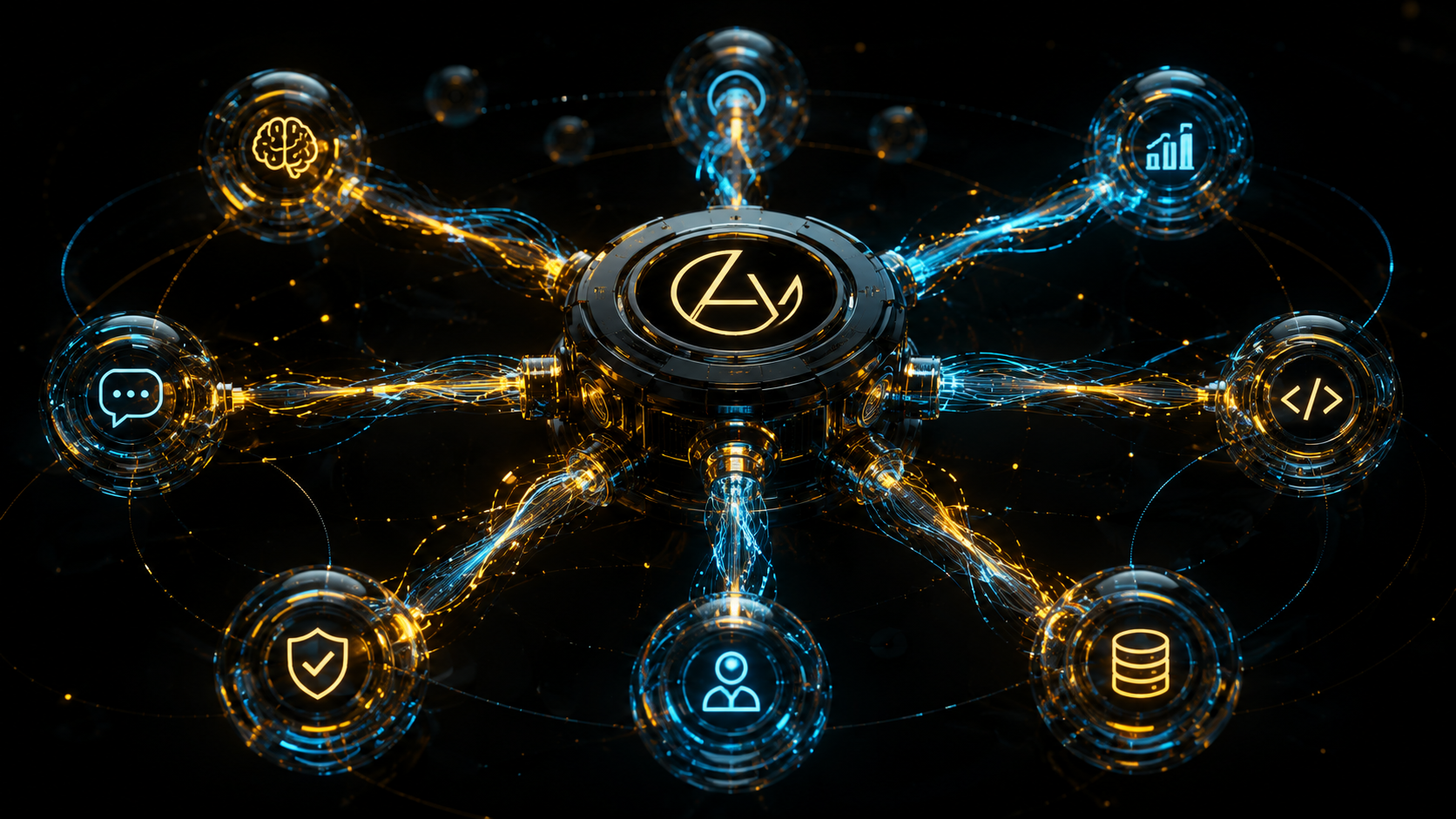
I hit the wall with single-agent architectures about eight months ago. I had a powerful local LLM running through Ollama, a well-tuned prompt library, and a solid pipeline for content generation. It worked. Until it didn't. The moment I tried to scale operations across multiple domains simultaneously—SEO analysis, content drafting, schema injection, competitive gap scanning—the whole thing choked. One agent cannot hold all of that context. It cannot reason about SEO keyword density while simultaneously validating JSON-LD schemas and checking plagiarism scores against a live web index.
That is when I made the architectural leap that changed everything in the AhteVerse. I stopped building smarter agents and started building systems of agents. Multi-agent architecture is not just an upgrade; it is an entirely different paradigm.
Conceptual Architecture Blueprint
graph TD
    Malicious["Prompt Injection Vector"] -->|Threat| Input["Raw Agent Input Node"]
    Input -->|Sanitization Filter| Shield("Vector Guard Sanitizer")
    Shield -->|Clean Context| LLM("Neural Processing Core")
    LLM -->|Secure Output| Execute["Autonomous Function Execution"]

    classDef secure fill:#1a3a2a,stroke:#00ff66,stroke-width:2px,color:#fff;
    classDef threat fill:#3a1a1a,stroke:#ff3333,stroke-width:2px,color:#fff;
    class Input threat;
    class Shield secure;
Why Single-Agent Workflows Are a Dead End
Let me be direct about why the single-agent model fails at scale. Every large language model operates within a finite context window. Whether that window is 32K, 128K, or even a million tokens, it is still a fixed boundary. When you overload a single agent with too many responsibilities, you get context pollution. The model starts confusing SEO instructions with proofreading directives. It hallucinates internal links that don't exist. It forgets the keyword density targets you set three prompts ago.
I experienced this firsthand inside our blogging pipeline. A single agent tasked with writing, optimizing, and validating would produce drafts that scored well on word count but failed plagiarism checks, or passed originality scans but missed critical schema markup. The solution was never a bigger model. The solution was decomposition.
The Orchestrator Pattern: Conducting the Symphony
The foundational pattern of any multi-agent system is the Orchestrator. Think of it as the conductor of a symphony orchestra. The conductor does not play any instrument. Instead, it coordinates timing, manages transitions, and ensures every section delivers its part in harmony.
In the AhteVerse blogging engine, our orchestrator is blogger_engine.py. It does not write a single word of content. It does not check a single keyword density score. What it does is execute a strict sequential pipeline: Stage 0 feeds validated topic data to Stage 3, which produces a draft that Stage 4 proofreads, which Stage 4.5 scans for AI fingerprints, which Stage 5 optimizes for SEO, which Stage 6 interlinks, which Stage 7 audits against competitors, which Stage 8 injects structured schemas, and which Stage 9 generates visual diagrams.
Each stage is an autonomous agent with a single responsibility. Each agent reads from a shared file system, processes its domain-specific logic, and writes its output back. The orchestrator simply calls them in sequence and halts if any agent fails. This is the Chain of Responsibility pattern adapted for agentic AI. For a deeper understanding of orchestration patterns in production systems, examine the research published in the AutoGen: Enabling Next-Gen Multi-Agent Systems paper by Microsoft Research.
Communication Protocols: How Agents Talk to Each Other
The critical design decision in multi-agent systems is how agents share state. There are three dominant patterns, and I have used all of them:
Shared File System: The simplest and most robust method. Each agent reads from and writes to a common directory. Our blogging agents use blogger/drafts/ as the shared memory layer. The writer creates a markdown file, the proofreader reads and overwrites it, the keyword optimizer reads and enhances it. There is no API overhead, no message queue latency, and no serialization complexity. For pipelines where agents execute sequentially, this is the optimal choice.
Message Passing: For concurrent agent execution, structured message passing via JSON payloads becomes necessary. Each agent publishes its output to a shared event bus, and downstream agents subscribe to relevant topics. This pattern is essential when you need real-time coordination—for example, a security scanner agent that must interrupt a content generation agent if it detects a prompt injection attempt.
Shared Memory with Vector Stores: The most advanced pattern. Agents read from and write to a shared vector database, enabling semantic retrieval across the entire system state. When our interlinker agent needs to find contextually relevant published posts, it queries the production database for semantic matches rather than relying on keyword string matching. This produces far more intelligent internal link suggestions.
Error Recovery and Fallback Strategies
Production multi-agent systems must handle failure gracefully. In my architecture, every agent is wrapped in a try-catch execution boundary within the orchestrator. If Stage 4.5 (the LLM detector) fails due to a model timeout, the orchestrator logs the failure but does not terminate the entire pipeline. The draft proceeds to Stage 5 with a warning flag.
For critical agents—like the keyword optimizer that enforces minimum word counts—failure triggers a hard stop. You cannot publish a 400-word article and expect AdSense approval. The orchestrator distinguishes between advisory agents (whose failures are tolerable) and gatekeeper agents (whose failures must halt the pipeline).
I also implement retry loops with exponential backoff for agents that depend on external services. Our proofreader queries DuckDuckGo for plagiarism scanning. If the network request fails, it retries three times with increasing delays before falling back to a local-only analysis mode. This defensive architecture ensures that temporary network instability never blocks a production deployment.
Building Your Own: The Minimum Viable Multi-Agent Stack
If you are building your first multi-agent system, start with three components: an Orchestrator, a Generator Agent, and a Validator Agent. The orchestrator calls the generator to produce output, then passes that output to the validator for quality checks. If validation fails, the orchestrator routes the feedback back to the generator for a second attempt.
This simple three-node architecture handles 80% of production use cases. You can expand it incrementally by adding specialized agents—a security scanner, an SEO optimizer, a schema injector—without restructuring the core pipeline. Each new agent slots into the orchestrator's execution chain as a modular, independent process.
The future of software is not one giant model doing everything. It is a network of focused, specialized agents collaborating through clean interfaces and shared protocols. Build small. Orchestrate big. That is the AhteVerse way.
We are initialized.