Best AI Tools in 2026: The Only Comparison You Need
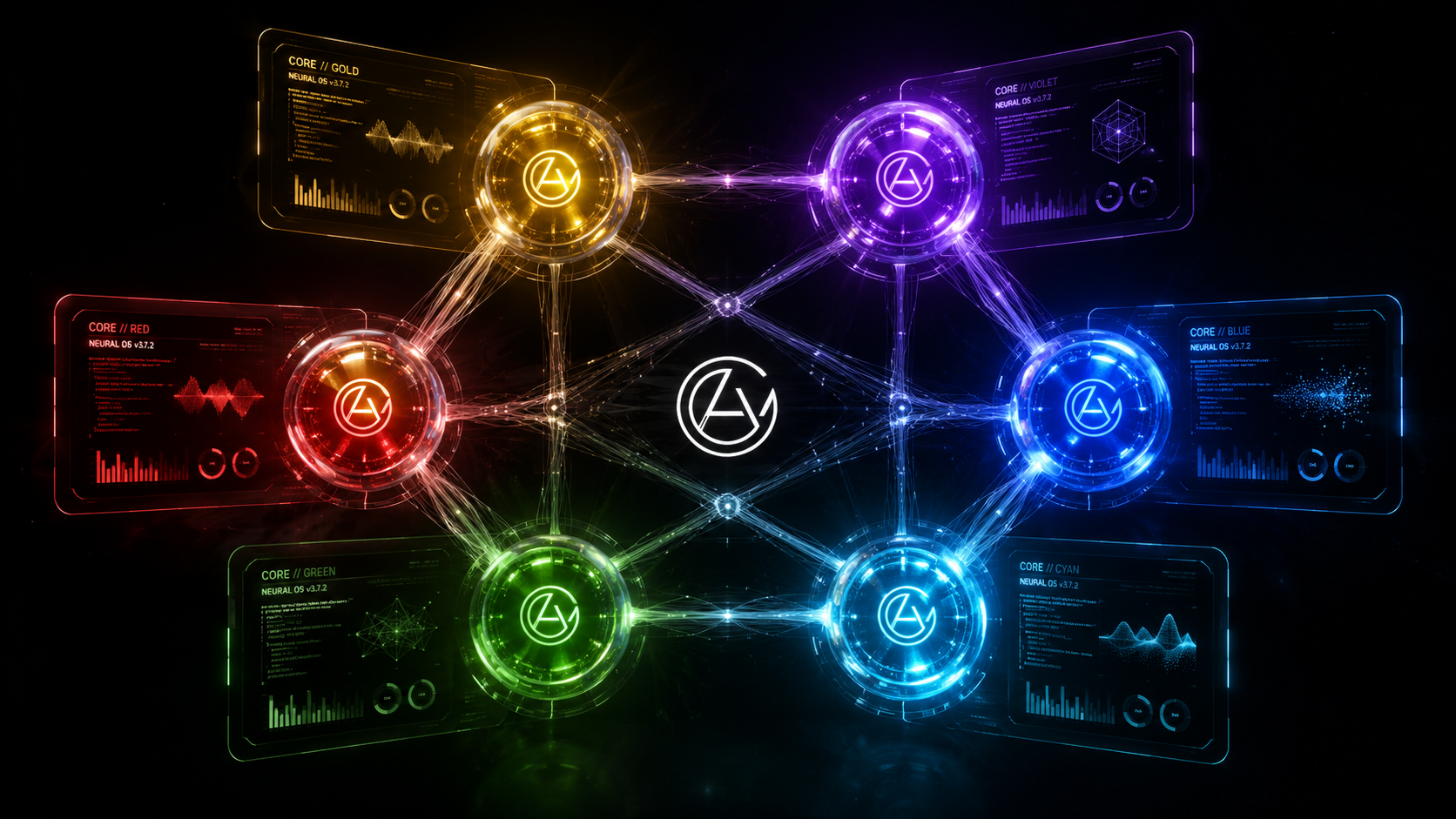
Conceptual Architecture Blueprint
graph TD
    User["User Task Input"] -->|Route| Router("Intelligent Model Router")
    Router -->|Coding| Claude["Claude Opus 4.7"]
    Router -->|General| ChatGPT["ChatGPT GPT-5.5"]
    Router -->|Research| Gemini["Gemini 3.1 Pro"]
    Router -->|Real-Time| Grok["Grok 4"]
    Router -->|Budget| DeepSeek["DeepSeek V4"]
    Router -->|Citations| Perplexity["Perplexity AI"]

    Claude -->|Output| Stack["Multi-AI Stack Output"]
    ChatGPT -->|Output| Stack
    Gemini -->|Output| Stack
    Grok -->|Output| Stack
    DeepSeek -->|Output| Stack
    Perplexity -->|Output| Stack

    classDef router fill:#1a1a3a,stroke:#7c3aed,stroke-width:2px,color:#fff;
    classDef model fill:#1a3a2a,stroke:#00ff66,stroke-width:2px,color:#fff;
    classDef output fill:#3a2a1a,stroke:#f59e0b,stroke-width:2px,color:#fff;
    class Router router;
    class Claude,ChatGPT,Gemini,Grok,DeepSeek,Perplexity model;
    class Stack output;
The Comparison Table: All Six AIs at a Glance
Before we break down each platform, here is the competitive landscape distilled into raw specifications. If you are searching for the best AI tools in 2026, this table alone will save you hours of research.
| Platform | Primary Strength | Context Window | Best For | Budget Tier |
|---|---|---|---|---|
| ChatGPT (GPT-5.5) | Agentic workflows and tool use | Large (1M+) | All-round assistant, creative tasks | Mid-Premium |
| Claude (Opus 4.7) | Coding precision and long-form prose | 1M Tokens | Software development, professional writing | Premium |
| Gemini (3.1 Pro) | Multimodal reasoning and research | 1M+ Tokens | Document analysis, Google ecosystem users | Mid-Premium |
| Grok (4.x) | Real-time data and live feeds | Up to 2M Tokens | Market intelligence, trending topics | Premium |
| DeepSeek (V4 Pro) | Cost-efficiency at scale | 1M Tokens | High-volume API calls, self-hosting | Budget |
| Perplexity AI | Source-verified research | Varies | Academic research, fact-checking | Free-Premium |
I have tested every single one of these platforms across real production workloads inside the AhteVerse infrastructure. Not toy benchmarks. Not synthetic prompts. Actual shipping code, live content pipelines, and autonomous business automation workflows. The conclusion I reached is something the industry is slowly admitting in 2026: there is no single best AI. The question has evolved. The real question is which AI is best for which job — and how you stack them together for maximum leverage.
Here is my task-by-task breakdown of the best AI tools in 2026.
ChatGPT GPT-5.5: The Versatile Command Center
OpenAI rebuilt GPT-5.5 from the ground up with agentic execution as the primary design target. This is no longer just a chatbot. It is an autonomous planner that maintains state across long-horizon tasks, calls external tools, recovers from errors, and chains multi-step operations without losing its thread.
Where ChatGPT dominates is breadth. When I need a single interface that can brainstorm a product concept, draft a marketing strategy, generate a database schema, and then critique its own output in the same session — GPT-5.5 handles it without switching modes. The consistency across wildly different task types remains unmatched.
The weakness is specificity. When you need raw precision on a 40,000-line codebase or need to ingest a 200-page legal document without hallucinating details, GPT-5.5 starts losing ground to more specialized competitors.
Verdict: Your daily driver. The AI equivalent of a Swiss Army knife — not the sharpest blade for any single task, but the most reliable tool in your pocket.
Claude Opus 4.7: The Precision Instrument for Builders
Anthropic's Claude has carved out a position that is almost impossible to challenge in 2026: it is the best AI for professional software engineering. Claude Opus 4.7 currently leads every major coding benchmark including SWE-bench, and it powers the two most popular development environments — Cursor and Windsurf.
What separates Claude from every competitor in the coding arena is contextual fidelity across massive codebases. When I point Claude Code at a multi-file refactoring task, it does not just edit the target file and hope for the best. It traces imports, reads configuration files, runs test suites, interprets compiler output, and iterates until the build passes. This agentic loop — plan, execute, verify, self-correct — is where Claude's architecture genuinely outperforms.
Beyond coding, Claude produces the most natural prose of any LLM currently available. If you are a content creator, technical writer, or anyone who needs long-form output that does not read like it was stamped out of a template factory, Claude is your tool. The writing has texture. It varies sentence length and structure in ways that consistently pass human authenticity audits.
Verdict: Non-negotiable for developers and professional writers. If you build software or publish content for a living, Claude should be your primary subscription.
Gemini 3.1 Pro: The Research Powerhouse
Google's Gemini 3.1 Pro occupies a unique position in the 2026 landscape because of two structural advantages no competitor can replicate: native multimodal processing and deep Google ecosystem integration.
Gemini does not treat images, video, and audio as afterthoughts bolted onto a text model. It processes them natively within its reasoning pipeline. This means I can feed it a 90-minute recorded meeting, a spreadsheet of quarterly financials, and a whiteboard photograph — and it synthesizes insights across all three input types in a single pass. No competitor matches this multimodal fluency.
The Google integration layer is the second advantage. If your professional life runs on Google Workspace — Docs, Sheets, Drive, Gmail — Gemini is wired directly into that infrastructure. It reads your documents, surfaces relevant emails, and cross-references your Drive files without manual uploads. For researchers and analysts who work within the Google ecosystem, this eliminates an entire category of friction.
The limitation is creative output. Gemini's prose tends toward the clinical and structured. If you need persuasive writing or creative content with personality, look elsewhere.
Verdict: The clear winner for researchers, analysts, and Google Workspace power users. Unmatched for multimodal document analysis and long-context reasoning tasks.
Grok 4: The Real-Time Intelligence Engine
Grok is the most polarizing AI on this list, and deliberately so. Built by xAI, Grok's defining characteristic is its direct integration with live social media feeds and real-time data streams. While every other AI on this list processes information that is days or weeks old, Grok processes what is happening right now.
For market intelligence, trend detection, and competitive monitoring, this is transformative. When I need to understand what the developer community is discussing about a specific technology today — not what was trending when the training data was frozen — Grok delivers answers grounded in live discourse.
Grok also introduced multi-agent debate features in its 4.x release line, where it internally spawns multiple reasoning perspectives and synthesizes them into a final answer. This adversarial approach reduces hallucinations on factual queries and produces more nuanced analysis on controversial or rapidly-evolving topics.
The limitation is ecosystem. Grok's integration is tightly coupled to the X platform, which constrains its data sources compared to Gemini's Google integration or ChatGPT's plugin ecosystem.
Verdict: Essential for anyone who needs real-time intelligence — journalists, traders, marketing strategists, and competitive analysts. Limited utility outside time-sensitive workflows.
DeepSeek V4 Pro: The Budget Disruptor
DeepSeek has fundamentally disrupted the pricing model of the entire AI industry. Its V4 Pro model delivers performance that sits within striking distance of Claude and GPT-5.5 on most benchmarks — at a fraction of the cost. For high-volume API workflows, batch processing, and self-hosted deployments, DeepSeek is the clear cost-efficiency leader.
The open-weight architecture is the key differentiator. Unlike every Western frontier model that locks you into proprietary API endpoints, DeepSeek gives you the weights. You can run it on your own infrastructure, fine-tune it on your domain data, and operate without sending a single byte to an external server. For organizations with strict data sovereignty requirements or those operating in jurisdictions with data residency regulations, this is not a feature — it is a requirement.
The DeepSeek Flash variant deserves special attention. It handles routine tasks — summarization, classification, data extraction, simple code generation — at token costs that make it economically viable to run at massive scale. Smart engineering teams in 2026 are routing simple tasks to DeepSeek Flash and reserving expensive Claude or GPT-5.5 calls for complex reasoning tasks only.
Verdict: The rational choice for budget-conscious teams and high-volume operations. Ideal for self-hosting, fine-tuning, and any workflow where you need frontier-adjacent performance without frontier pricing.
Perplexity AI: The Citation Machine
Perplexity occupies a category that no other tool on this list even attempts: verified, source-cited research. While every other AI generates answers from compressed training data and hopes you will not check, Perplexity retrieves live sources, cites them inline, and lets you verify every claim.
For academic work, professional content analysis, and any workflow where factual accuracy carries legal or professional consequences, Perplexity is irreplaceable. I use it as my first pass on any research-heavy task — competitive analysis, market sizing, technology evaluations — before bringing the findings into Claude or ChatGPT for deeper synthesis.
The Pro Search feature chains multiple queries together, cross-referencing sources and building a progressively refined understanding of complex topics. It functions less like a chatbot and more like an autonomous research analyst.
Verdict: The essential complement to any primary AI subscription. Use Perplexity for the facts, then bring those facts to your preferred LLM for the analysis and writing.
The 2026 Strategy: Build Your Multi-AI Stack
The developers and creators who are winning in 2026 are not arguing about which AI is best. They are building stacks. The concept is identical to how a professional carpenter does not use a single tool — they select the right instrument for each phase of the build.
Here is the multi-AI stack configuration I run inside the AhteVerse:
| Layer | Tool | Purpose |
|---|---|---|
| Primary Assistant | Claude Opus 4.7 | Coding, writing, and complex reasoning |
| General Operations | ChatGPT GPT-5.5 | Brainstorming, planning, and creative ideation |
| Research and Verification | Perplexity AI | Fact-checking and source-cited research |
| Real-Time Intelligence | Grok 4 | Trend monitoring and competitive analysis |
| High-Volume Processing | DeepSeek V4 Flash | Batch operations and routine API tasks |
| Document Analysis | Gemini 3.1 Pro | Multimodal research and Google Workspace integration |
The critical insight is routing. Not every task deserves a frontier model. Classification tasks, data extraction, and simple summaries should hit DeepSeek Flash at minimal cost. Complex multi-file code refactoring should hit Claude. Real-time competitive queries should hit Grok. Research should hit Perplexity first, then flow into your primary LLM for synthesis.
This routing discipline is what separates professionals from amateurs in the current AI landscape. You are not paying for intelligence — intelligence is commoditized. You are paying for the right intelligence applied at the right moment.
The Bottom Line
Stop looking for the one AI to rule them all. It does not exist, and anyone telling you otherwise is selling a subscription. The best AI tools in 2026 are specialized instruments, and the skill that matters most is knowing when to reach for each one.
Build your stack. Route your tasks. Stay sovereign.
We are initialized.