Mastering the Model-Context-Protocol Standard for Agents
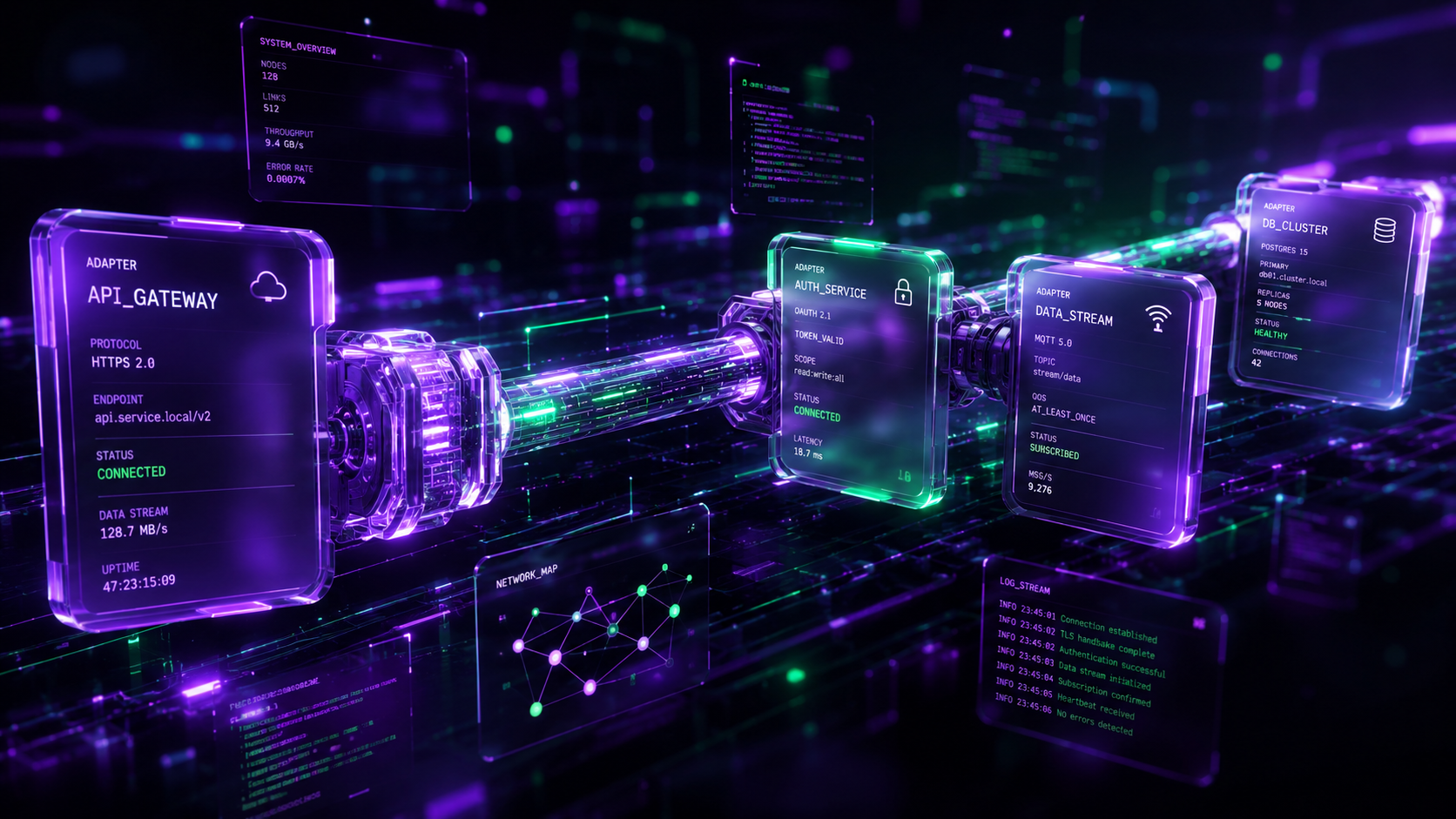
When exploring the digital void, mastering model-context-protocol is essential for true architectural leverage. I watched the developer space fracture as every software platform rushed to build custom plugins for artificial intelligence. We built isolated API integrations, wrote brittle parser scripts, and hoped our Context Window would survive the load of multiple LLMs. In 2026, those fragmented architectures feel like writing custom network protocols for every website before the adoption of HTTP. Within the AhteVerse, we realize that true software leverage requires a standardized, open context bus.
We are entering the era of the open-standard model-context-protocol. This is not just another API wrapper. It is the new architectural standard for the agentic web, ensuring that client integrations remain clean and modular.
Here is my engineering audit of why the model-context-protocol ecosystem is the foundation of agentic automation.
The Integration Crisis: Why Custom Integration is a Trap
Before the rise of model-context-protocol, connecting an AI agent to a data source required custom glue code. If you wanted your agent to read a database, analyze a codebase, and push updates to Slack, you had to write three distinct integration layers. Each tool had its own authentication schemas, data formats, and rate limits. This design created massive engineering overhead and made agentic loops unstable.
If you change a database schema, the agentic parser breaks. If an API updates its payload structure, your agent experiences a cognitive split.
By utilizing model-context-protocol, we establish a clean, protocol-level separation between the client and the data sources. The client does not need to know the database layout or the Slack API structure. It only needs to communicate via standard protocol schemas. For official specifications and design paradigms, audit the Model Context Protocol GitHub Repository.
The Core Architecture: Clients, Servers, and Transports
The standard model-context-protocol specification is designed around three main architectural components:
1. Model-context-protocol Clients: Applications like Cursor, Claude Code, or desktop developer environments that orchestrate the AI models.
2. Model-context-protocol Servers: Lightweight, stateless processes that expose resources, prompts, and tools to the client.
3. Model-context-protocol Transports: The communication channels that carry messages, typically operating over standard input/output (Stdio) or Server-Sent Events (SSE).
The underlying communication relies on JSON-RPC 2.0. This keeps the messaging layer lightweight and compatible with standard developer tooling. To study the payload specifications of model-context-protocol, reference the official Model Context Protocol Specification.
Conceptual Architecture Blueprint
sequenceDiagram
    participant Client as MCP Client (Cursor / Claude)
    participant Protocol as JSON-RPC Transport Layer
    participant Server as MCP Server (Local / Remote)
    participant Data as Data Host (Database / Files)

    Client->>Protocol: Initialize session handshake
    Protocol->>Server: Handshake confirmation
    Client->>Protocol: Request schema capabilities (list_tools)
    Server-->>Client: Expose JSON schema tools list
    Client->>Protocol: Execute tool call (e.g. read_file)
    Server->>Data: Read data source
    Data-->>Server: Return raw payloads
    Server-->>Client: Serve clean semantic response
Why Standardization is the Only Path Forward
Standardizing the context bus via model-context-protocol resolves the data gravity problem. In legacy designs, developers spent 80% of their time writing adapters to move data to the model. The model-context-protocol engine inverts this equation. It brings the protocol interface directly to the data, establishing an AI-Native Architecture that drives Autonomous Loops.
A local model-context-protocol server can run on your workstation, accessing your filesystem and tools. Alternatively, it can run on a remote server, wrapping enterprise databases in a secure protocol shell. This allows developers to build reusable servers that any compliant client can connect to instantly.
We no longer write custom code to connect our local workspace to our editors. We just spin up the corresponding model-context-protocol connection. This decoupling is what makes agentic orchestration scale.
To see how this connects with our self-hosted automation strategies, look at our guide on Active Intelligence and n8n Workflows to see how modular engines drive efficiency.
Hands-On Integration: Building an MCP Server
Exposing tools to an agent via model-context-protocol is straightforward. Below is a complete, production-grade Python script illustrating how to build an MCP server that queries system database schemas:
import sys
import json

def write_message(msg):
    sys.stdout.write(json.dumps(msg) + "\n")
    sys.stdout.flush()

def read_messages():
    for line in sys.stdin:
        if line.strip():
            yield json.loads(line)

def handle_request(request):
    req_id = request.get("id")
    method = request.get("method")
    params = request.get("params", {})

    if method == "tools/list":
        return {
            "jsonrpc": "2.0",
            "id": req_id,
            "result": {
                "tools": [
                    {
                        "name": "query_db_schema",
                        "description": "Exposes relational database schemas to the agent.",
                        "inputSchema": {
                            "type": "object",
                            "properties": {
                                "table_name": {"type": "string"}
                            },
                            "required": ["table_name"]
                        }
                    }
                ]
            }
        }

    elif method == "tools/call":
        tool_name = params.get("name")
        arguments = params.get("arguments", {})

        if tool_name == "query_db_schema":
            table = arguments.get("table_name")
            result = f"Schema for {table}: id INT PRIMARY KEY, name VARCHAR(255), active BOOLEAN"
            return {
                "jsonrpc": "2.0",
                "id": req_id,
                "result": {
                    "content": [{"type": "text", "text": result}]
                }
            }

    return {
        "jsonrpc": "2.0",
        "id": req_id,
        "error": {"code": -32601, "message": "Method not found"}
    }

def main():
    for msg in read_messages():
        response = handle_request(msg)
        write_message(response)

if __name__ == "__main__":
    main()
This server communicates via Stdio. The host application starts the python process, pipes JSON requests to standard input, and reads the tool executions from standard output. This simple, streams-based connection makes local sandboxing easy under the model-context-protocol specification.
Security in the Protocol Layer: Sandboxes and Gateways
Giving autonomous agents the ability to invoke tools introduces significant threat vectors. An agent with access to an open filesystem or database can be hijacked via indirect prompt injection.
We address these security concerns in the AhteVerse by establishing strict sandbox boundaries around the model-context-protocol runtime:
1. Transport Isolation: Run local servers inside dedicated container environments. This limits their access to designated directory paths.
2. Access Control Lists: Enforce strict tool permissions. A client can call read tools without validation, but any write or execution calls require explicit authorization.
3. Semantic Firewalls: Filter inputs and outputs. Verify that tool return values match expected structures before parsing them in the client context.
By treating the model-context-protocol connection as an untrusted boundary, you protect the neural core of your system from hostile overrides. This is critical when incorporating Vector Embeddings, RAG storage, or advanced cognitive loops. This security standard mirrors our guidelines for Local Reasoning and Ollama Sandboxing, where memory isolation is non-negotiable.
The Horizon of the Standardized Web
We are moving toward an internet where websites do not just serve HTML for humans. They will serve model-context-protocol endpoints for agents.
Your documentation, database, and system scripts will be exposed through standardized context servers. Agents will navigate these nodes, discover capabilities dynamically, and execute outcomes across ecosystems.
Build your adapters on open standards. Expose your tools securely. Let your systems communicate.
We are initialized.