Architectural Pillars of Chainlink LINK Technology
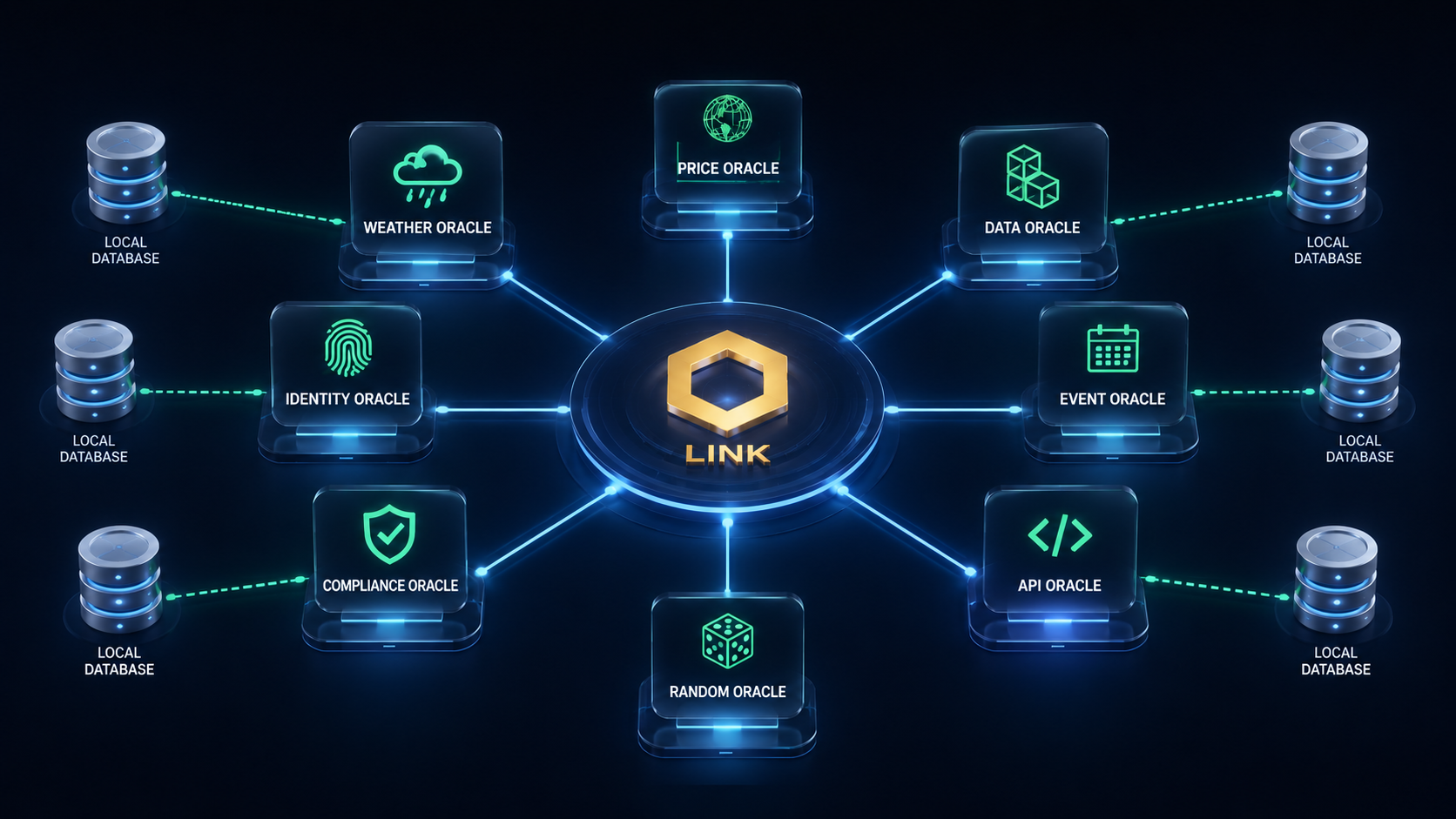
I have spent years building digital architectures, isolating system anomalies, and designing active intelligence layers across the AhteVerse. In that time, I have observed a recurring pattern in the developer community: the tendency to mistake the coin for the machine. When people talk about Chainlink and LINK, they almost always default to price charts, staking returns, and speculative market cycles.
As a software architect, I find that focus incredibly shallow.
The real genius of Chainlink lies not in its speculative utility, but in its underlying technology—the Decentralized Oracle Network (DON). It is a masterclass in secure distributed systems design, a flawlessly balanced consensus engine that bridges deterministic blockchain ledgers with the messy, non-deterministic real world without creating single points of failure.
To help developers decouple the hype from the real technology, I have compiled this architectural audit. Here is my definitive ranking of the top five engineering pillars that make Chainlink the most secure decentralized oracle machine on earth.
Rank 5: Decentralized Data Aggregation Schemas
At the bottom of the core architecture—yet essential for data integrity—are Decentralized Data Aggregation Schemas. Blockchains are completely deterministic; they cannot call external API endpoints directly. Chainlink solves this by dispatching multiple independent oracle nodes to retrieve data from separate sources.
To prevent a single corrupt node or compromised API from poisoning the on-chain smart contract state:
1. Multiple oracle nodes fetch the target data point (e.g. an asset price or weather update) off-chain.
2. The network processes these inputs using robust aggregation algorithms, taking the cryptographic median of all returned values to filter out extreme outliers.
This multi-sourced aggregation ensures that even if a subset of nodes fails or reports manipulated data, the finalized value submitted to the ledger remains correct. To start building secure payment gateways and automation pipelines, explore the Smart AI Business Kit.
Rank 4: Verifiable Random Function (VRF) Architectures
To facilitate tamper-proof, unpredictable outcomes on public ledgers without relying on manipulable block headers or centralized random number generators, Chainlink utilizes a highly secure, cryptographic primitive: Verifiable Random Function (VRF).
The VRF pipeline executes in two distinct phases:
- Off-Chain Generation: When a contract requests randomness, a VRF node generates a random number off-chain along with a mathematical cryptographic proof demonstrating its validity.
- On-Chain Cryptographic Verification: The on-chain VRF coordinator smart contract verifies the cryptographic proof before exposing the random number to the requesting contract.
Because the on-chain contract only accepts values with valid, tamper-proof mathematical proofs, it is impossible for validating nodes or oracle operators to predict or manipulate the random output. It is a highly optimized, economic shield that protects game-theoretic applications in the AhteVerse from coordination exploits.
Rank 3: Cross-Chain Interoperability Protocol (CCIP) Gateways
As the global state machine fragments across thousands of Layer 1 blockchains and Layer 2 rollups, secure inter-network communication becomes paramount. Chainlink's solution is the Cross-Chain Interoperability Protocol (CCIP).
CCIP introduces an exceptionally secure architecture for cross-chain transactions:
- Programmable Token Transfers: Moves tokens across chains while executing custom smart contract instructions in a single atomic transaction.
- The Active Risk Management (ARM) Network: A secondary, independent network of security nodes that continuously monitors the primary CCIP routers for anomalies, with the power to programmatically pause the network if cross-chain fraud is detected.
By isolating token movement mechanics from security auditing processes, CCIP establishes an invincible trust boundary that prevents the multi-million dollar bridge hacks common to other architectures. For detailed API references and developer blueprints, developers should consult the Chainlink Developer Documentation.
Rank 2: Off-Chain Reporting (OCR) Protocol Runtime
At Rank 2 in my audit is the Off-Chain Reporting (OCR) protocol. In early versions of Chainlink, every oracle node had to submit its individual data proposal directly on-chain, creating massive gas fee bottlenecks under network congestion.
OCR solves this by introducing a highly optimized off-chain consensus engine:
- Peer-to-Peer Gossip Networking: Node operators communicate off-chain using a secure, low-latency P2P protocol to propose and agree on data values.
- Aggregated Cryptographic Signatures: The nodes aggregate their validation signatures off-chain, producing a single, compact transaction payload containing all validation votes.
This aggregated signature is written to the blockchain in a single transaction, reducing on-chain gas consumption by up to 90% while retaining the complete cryptographic security of the decentralized oracle set.
Rank 1: Decentralized Oracle Network (DON) Topology
At the top of my audit is the Decentralized Oracle Network (DON) Topology. It is the core engineering pillar of Chainlink, resolving the historic "oracle problem" by establishing highly customizable, secure networks of independent, sybil-resistant node operators.
A DON is not a single database or monolithic network; it is a modular, custom-configured cluster of world-class infrastructure providers:
1. Cryptographic Staking (Crypto-Economic Security): Node operators stake LINK as collateral to guarantee honest performance. If a node attempts to submit falsified data or fails validation rounds, its stake is slashed programmatically.
2. Reputation Profiles: Nodes maintain verifiable, on-chain performance metrics tracking latency, data precision, and uptime variables.
By binding capital allocation directly to cryptographic data validation, the DON topology provides an invincible economic barrier against hostile takeovers, ensuring absolute trust and data integrity.
Conceptual Architecture Blueprint
sequenceDiagram
    participant User as Sovereign User
    participant Wallet as DID Identity Wallet
    participant Verifier as Decentralized Verifier
    participant Ledger as Immutable Ledger

    User->>Wallet: Request cryptographic proof
    Wallet->>Verifier: Send Zero-Knowledge proof (ZKP)
    Verifier->>Ledger: Verify anchor hash state
    Ledger-->>Verifier: Return state confirmation
    Verifier-->>User: Grant sovereign access
Technical Architecture Checklist: Implementing Local Chainlink Monitors
If you are building custom indexing pipelines or automated accounting gateways that track network states in real-time, prioritize these architectural standards:
- Aggregator Round ID Auditing: When reading price feeds, always verify that the returned data is fresh. Implement dynamic logic that checks
updatedAttimestamps and round IDs before executing downstream transactions. - Decoupled Off-Chain Listening: Do not lock up primary API execution threads waiting for VRF requests to resolve on-chain. Use asynchronous event listeners connected to message queues to handle random seeds when they land.
- Active Risk Monitoring: If executing cross-chain operations via CCIP, configure local alerts to track the ARM network status, ensuring your platforms react dynamically during bridge pauses.
By respecting these technical realities, you ensure that your software platforms operate with the same legendary resilience as the decentralized oracle machine itself.
Stay sovereign in the digital void. We are initialized.